Ultrasonic Spraying AF Coating
AF coating, or anti-fingerprint coating, is a functional thin film with low surface energy and high light transmittance. It is widely used in touchscreen devices, optical components, and other fields, effectively achieving oil, fingerprint, and dust resistance. Ultrasonic spraying technology, with its precise and controllable atomization advantage, has become the preferred process for AF coating preparation, significantly improving coating uniformity and product yield, and driving the upgrade of precision coating preparation technology.
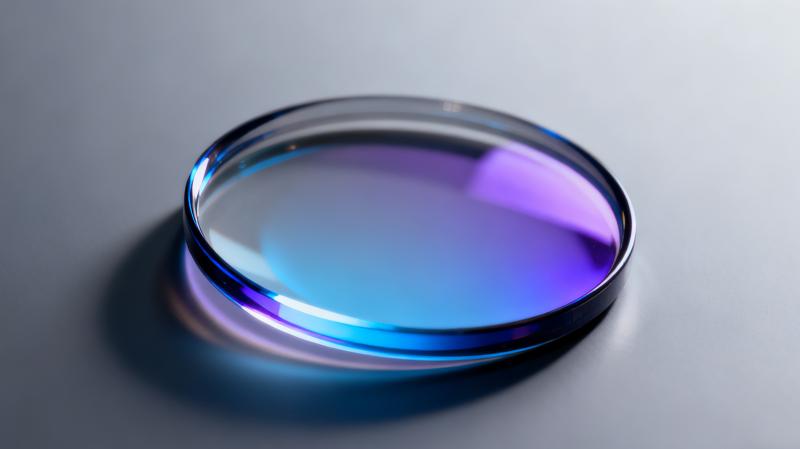
The core principle of ultrasonic spraying AF coating is to use ultrasonic energy to achieve fine atomization of the coating material. A piezoelectric transducer converts a high-frequency electrical signal into mechanical vibration of the same frequency. The vibration energy is transmitted to the atomization surface at the nozzle tip, causing the flowing AF coating material to form extremely fine capillary waves. When the vibration energy reaches a critical value, the droplets are violently torn apart at the wave crest, forming uniform droplets at the micron or even nanometer scale. These droplets are then precisely delivered to the substrate surface by a carrier gas, and subsequently cured to form a dense AF coating. This atomization method eliminates the dependence on high-pressure gas in traditional pressure spraying, ensuring the consistency of droplet size from the source.
Compared to traditional spraying processes, ultrasonic spraying of AF coatings offers three core advantages. First, superior coating uniformity. The extremely narrow droplet size distribution generated by ultrasonic atomization avoids defects common in traditional processes such as “thick edges” and “pinholes,” resulting in a smooth surface and controllable thickness tolerance, making it particularly suitable for products with extremely high surface precision requirements, such as touchscreens. Second, high material utilization. Strong droplet orientation minimizes “overspraying” and rebound losses, achieving a material utilization rate of over 90%, significantly reducing the cost of expensive AF coatings. Third, excellent process compatibility. The entire spraying process is completed at room temperature or lower, making it friendly to heat-sensitive substrates and preventing substrate deformation or performance degradation caused by high temperatures. It also adapts to substrates with complex three-dimensional structures, easily covering difficult-to-handle areas such as grooves and edges.
A complete ultrasonic spraying AF coating process requires strict process control. The first step is substrate pretreatment, where ultrasonic cleaning removes ink residue, oil, and other contaminants from the substrate surface, followed by drying to ensure a clean and dry surface—a crucial prerequisite for ensuring coating adhesion. Following precise spraying, parameters such as ultrasonic power, paint flow rate, and nozzle movement speed are controlled to achieve accurate deposition of the preset coating thickness. After spraying, a curing process is initiated, where baking fully cures the AF coating, forming a stable protective film. Finally, post-processing and quality inspection are performed. Non-sprayed surfaces undergo plasma treatment to remove any excess paint and increase surface tension. The coating performance is then verified through tests such as water droplet angle and abrasion resistance to ensure product quality.
Currently, ultrasonic spraying AF coatings have achieved large-scale application in fields such as electronics and optical instruments. In the touchscreen device field, AF coatings prepared using this process achieve excellent water droplet angles, provide long-lasting fingerprint resistance, and maintain high light transmittance, enhancing the user’s touch experience. In the optical component field, it provides anti-fouling protection for lenses and other components without affecting optical performance. With technological advancements, its application scenarios are gradually expanding to more fields such as automotive touchscreens and medical devices.
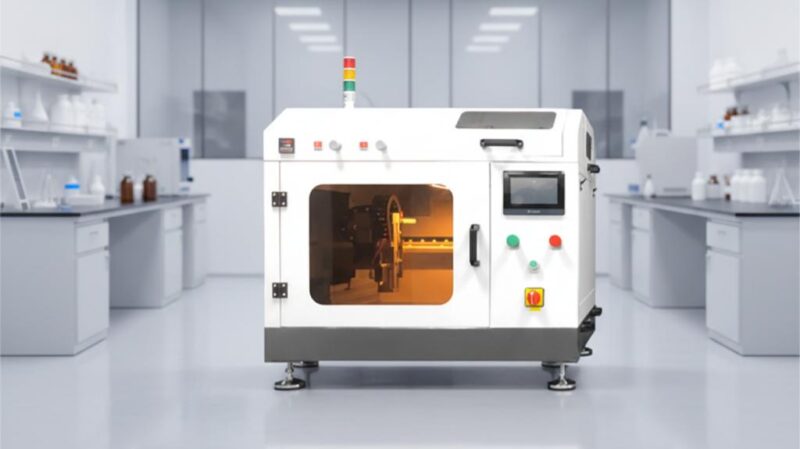
Ultrasonic spraying AF coatings, with their high precision, high efficiency, and low cost, have become the mainstream technology for preparing functional protective coatings. In the future, with the advancement of automation control and materials technology, this process will achieve further breakthroughs in areas such as coating performance optimization and large-area spraying efficiency improvement, providing more reliable surface protection solutions for advanced manufacturing industries.
About Cheersonic
Cheersonic is the leading developer and manufacturer of ultrasonic coating systems for applying precise, thin film coatings to protect, strengthen or smooth surfaces on parts and components for the microelectronics/electronics, alternative energy, medical and industrial markets, including specialized glass applications in construction and automotive.
Our coating solutions are environmentally-friendly, efficient and highly reliable, and enable dramatic reductions in overspray, savings in raw material, water and energy usage and provide improved process repeatability, transfer efficiency, high uniformity and reduced emissions.
Email: market2@cheersonic.com

评论
发表评论