Ultrasonic Spraying Process for Li-ion Battery Ceramic Separators
Process Scheme for Preparing Ceramic Layers of Lithium-ion Battery Ceramic Separators Using Ultrasonic Spray Coating
Based on the core requirements of lithium-ion battery ceramic separators for ceramic layers—”1-6μm thickness, uniform density, and high adhesion”—and combining the technical advantages of ultrasonic spray coating machines—”low-damage atomization and precise thickness control”—the following complete preparation scheme is formulated, covering the entire process from preliminary preparation to performance verification.
Preliminary Preparation: Slurry and Equipment Debugging
1. Ceramic Slurry Preparation (Adapted to Ultrasonic Atomization Characteristics)
Composition Design: Al₂O₃ (particle size 100-500nm) or boehmite as the main component (60%-80%), combined with dispersants (such as ammonium polyacrylate, 1%-3%) and binders (such as polyvinylidene fluoride, 5%-10%). The solvent used is N-methylpyrrolidone (NMP) or deionized water, controlling the solid content to 20%-60% (corresponding to a viscosity of 200-1000 cP, adapted to ultrasonic atomization requirements). Dispersion Treatment: Planetary ball milling (200-400 r/min, 2-4 h) + ultrasonic dispersion (300-500 W, 30-60 min) is used to ensure particle agglomeration size ≤1 μm, avoiding nozzle clogging or coating defects during atomization.
2. Ultrasonic Spraying Equipment Debugging
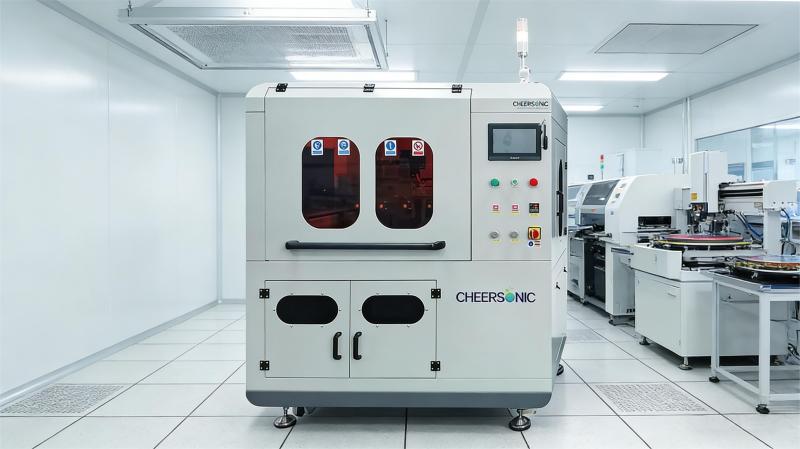
Core Parameter Settings: Ultrasonic frequency 20-80 kHz (high frequency, such as 60-80 kHz, for fine particles; low frequency, such as 20-40 kHz, for coarse particles), nozzle distance from the base film 50-100 mm (too close and it will rub against the film; too far and it will cause droplet dispersion), slurry flow rate 0.5-5 mL/min, nozzle moving speed 1-5 m/min (synchronized with the base film unwinding speed during roll-to-roll production).
Pretreatment System Calibration: Activate the base film pretreatment module (plasma or corona treatment, power 50-100W) to increase the surface tension of the PE/PP base film (from 30mN/m to 40-50mN/m), enhancing adhesion to the ceramic slurry and preventing subsequent coating peeling.
Core Preparation Process: Roll-to-Roll Continuous Spraying
1. Continuous Base Film Conveying and Pretreatment: Using a roll-to-roll (R2R) system, the PE/PP base film (10-20μm thick) is unwound from the unwinding roller. Tension control (0.5-1.0N) ensures the base film is flat and wrinkle-free. It then enters the pretreatment unit, where plasma bombardment removes oil and weak boundary layers from the base film surface, activating surface functional groups and laying the foundation for ceramic layer bonding.
2. Ultrasonic Atomization Spraying and Coating Formation
The pretreated base film enters the spraying chamber. An ultrasonic nozzle atomizes the ceramic slurry into uniform droplets of 5-50 μm using high-frequency vibration, depositing them onto the base film surface at a low velocity (0.1-0.5 m/s). The total thickness is controlled through multi-pass spraying (1-5 passes): each pass is 1-2 μm thick. For a 6 μm thick coating, 3-5 passes can be stacked, with a 30-60 s interval between each pass (ensuring initial evaporation of the solvent from the previous pass and preventing coating sagging).
Real-time monitoring during spraying: A laser thickness gauge (accuracy ±0.1 μm) is used to detect the coating thickness online. A feedback system automatically adjusts the slurry flow rate and nozzle speed to ensure thickness uniformity error ≤ ±5%, avoiding localized excessive thickness leading to increased ion transport resistance or localized thinness causing thermal shrinkage risks.
3. Low-Temperature Drying and Rewinding
The coated base film enters the drying channel, employing segmented temperature control (segment 80-90℃, segment 100-120℃, segment 90-100℃), with a total drying time of 3-5 minutes. Solvent is removed slowly (heating rate 5-10℃/min) to reduce internal stress in the coating. The moisture content of the dried coating must be ≤0.5% to prevent gas generation during subsequent battery electrolyte filling.
Finally, after cooling by cooling rollers (temperature 25-30℃), it is wound up by rewinding rollers (tension 1.0-1.5N, matched to the unwinding tension), completing the ceramic separator preparation. During the winding process, scratches or wrinkles to the coating must be avoided.
Key Process Control Points: Mitigating Performance Risks
1. Atomization Stability Control
If uneven droplet distribution occurs (manifested as pinholes in the coating): Check the slurry viscosity (if too high, add solvent to dilute to a suitable range; if too low, increase the solids content), or adjust the ultrasonic power (increase it appropriately if insufficient to avoid overload and atomization disorder).
If coating edge accumulation occurs: Adjust the nozzle movement trajectory (use a “U” shaped path), or add airflow barriers (wind speed 0.1-0.2 m/s) on both sides of the spray chamber to prevent droplets from spreading to the edges.
2. Coating Adhesion and Structural Density Control
Insufficient adhesion (coating peeling off after bending test): Optimize pretreatment parameters (extend plasma treatment time to 60-90 s), or increase the binder ratio (from 5% to 8%-10%), but avoid excessive binder leading to decreased coating porosity (affecting ion transport).
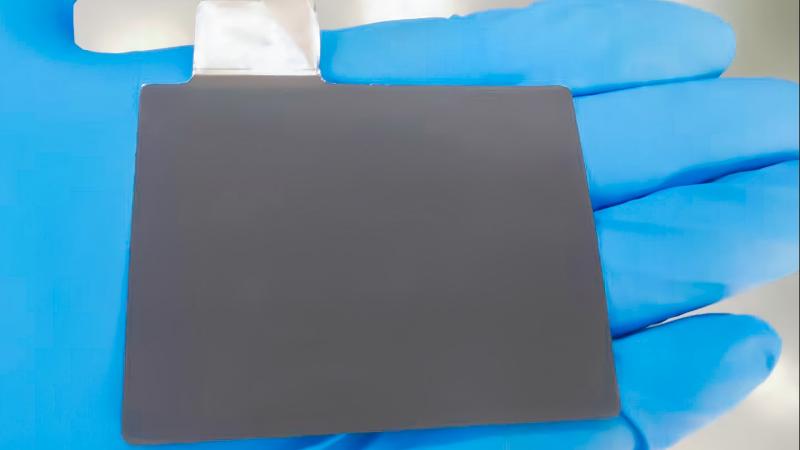
Abnormal porosity (too high or too low): Porosity can be controlled between 30%-50% (balancing ion transport and mechanical strength) by adjusting the slurry solid content (high solid content results in low porosity, and vice versa) or controlling the drying rate (slow drying easily forms uniform pores, while rapid drying easily leads to pore collapse).
Performance Verification: Matching Lithium Battery Usage Requirements
Basic Performance Testing: Thickness (laser thickness gauge, 1 point measured every 10cm, average of 10 points), uniformity (error ≤ ±5%), thermal shrinkage rate (baked at 150℃ for 1h, longitudinal shrinkage ≤3%, transverse shrinkage ≤5%, meeting thermal stability requirements).
Core Function Verification: Puncture resistance (≥3N, using a 0.5mm diameter steel needle, puncture speed 10mm/min), ionic conductivity (≥1×10⁻³S/cm after immersion in electrolyte, ensuring ion transport efficiency), interfacial impedance (≤50mΩ after assembling a half-cell with electrodes, verifying interfacial stability).
About Cheersonic
Cheersonic is the leading developer and manufacturer of ultrasonic coating systems for applying precise, thin film coatings to protect, strengthen or smooth surfaces on parts and components for the microelectronics/electronics, alternative energy, medical and industrial markets, including specialized glass applications in construction and automotive.
Our coating solutions are environmentally-friendly, efficient and highly reliable, and enable dramatic reductions in overspray, savings in raw material, water and energy usage and provide improved process repeatability, transfer efficiency, high uniformity and reduced emissions.
Email: market2@cheersonic.com

评论
发表评论